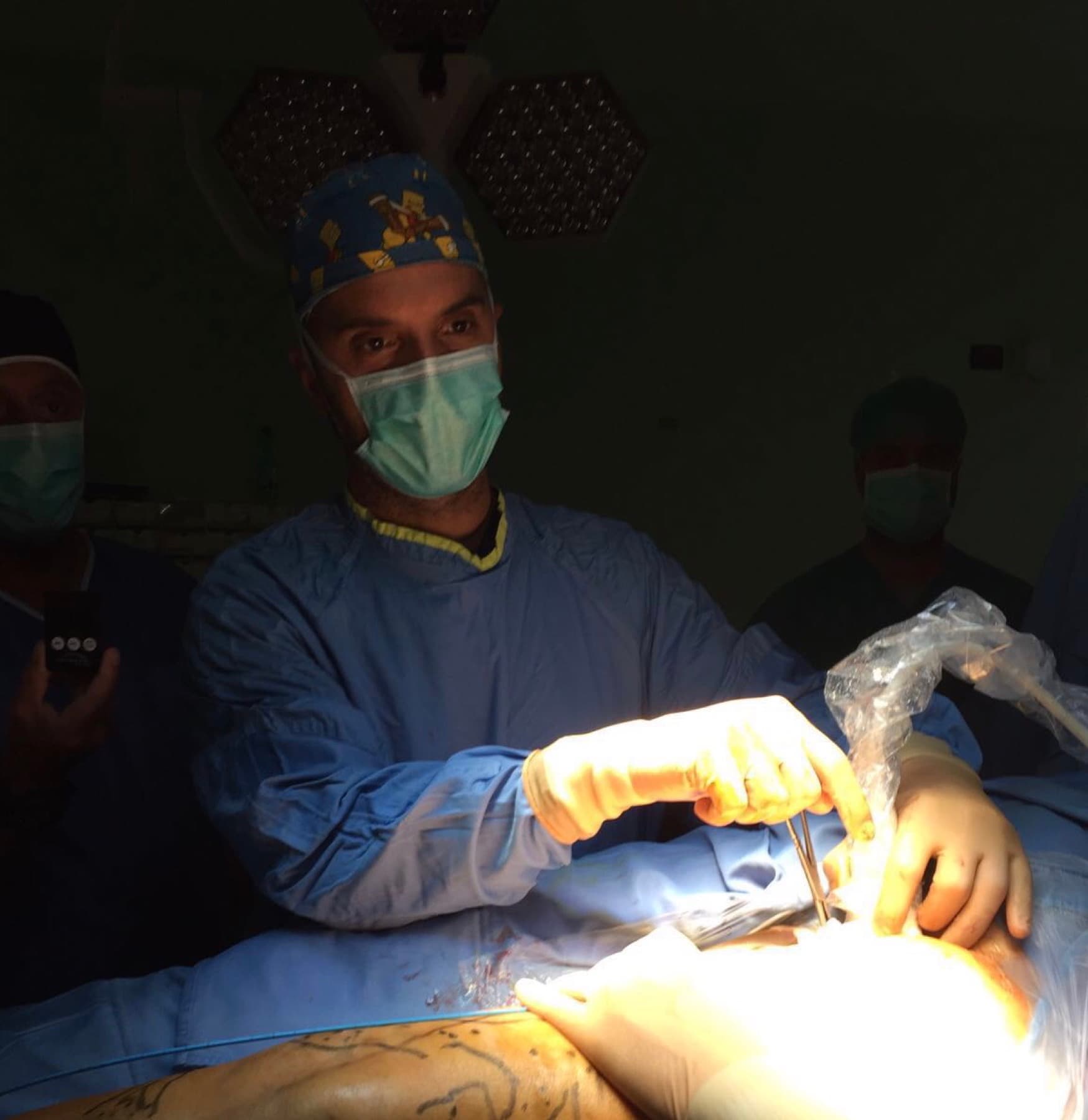
Treating varicose veins calls for a first strategic choice: remove the diseased vessel, or repair it.
The subject is a chance to underline the difference between “technique” and “strategy”. That distinction is fundamental in a scientific and technological era marked by a constant market offer of innovative instrumentation. The innovation in question concerns technique, and is characterised by a continuous attempt to improve the minimal invasiveness of the procedure. That, however, is not a strategic innovation, because the therapeutic orientation remains removal of the vessel, much like surgical stripping.
While the therapeutic “strategy” can be defined as “the choice between removing and repairing the vessel”, the technique is rather “the instrumentation used to carry out the strategy selected before the operation”. The main reparative strategy is called CHIVA, an acronym for the office-based haemodynamic correction of venous insufficiency.
Turning reflux into drainage
Haemodynamic treatment following the CHIVA strategy rests on the idea of turning venous reflux into a physiological drainage flow. This is achieved by closing the “taps” that feed the pathological flow inside a vein, letting that vein drain into normally functioning circuits (Gianesini S, et al. CHIVA strategy in chronic venous disease treatment: instructions for users. Phlebology Journal 2015).
The strategic option of not removing a refluxing vein but rather restoring its physiological drainage had already been elegantly described in 1971 by Fegan's group (Quill RD, Fegan WG. Reversibility of femorosaphenous reflux. Br J Surg. 1971).
The evidence
In 2019 a major review of the literature confirmed that the CHIVA approach can reduce the recurrence rate of varicose veins, with related benefits in quality of life and complications (Guo L et al. Long-term efficacy of different procedures for treatment of varicose veins: a network meta-analysis. Medicine (Baltimore). 2019).
The weight of operator experience
Since this is an operation designed around the specific case of each individual patient, as published back in 2011, operator experience is essential, particularly in haemodynamic treatments (Milone M. Recurrent varicose veins of the lower limbs after surgery. Role of surgical technique (stripping vs. CHIVA) and surgeon's experience. G Chir. 2011).
These procedures are tailored to the precise haemodynamic “measurements” of the patient, and therefore demand significant ultrasound experience in order to identify correctly the anatomical segments that deserve treatment.
In conclusion, CHIVA treatment — demanding as it is for the surgeon to learn — is an opportunity to evolve not only in technological development, in the form of ever more minimally invasive instrumentation, but also in the strategic option tailored to the specific case, improving not only invasiveness but also clinical performance and procedural time.
Over the past decade it has also been shown that this approach can be carried out with the most modern endovenous instruments, further minimising invasiveness for the patient and optimising the cosmetic result, free of surgical scars (Gianesini S. Segmental saphenous ablation for chronic venous disease treatment. Phlebology. 2021).