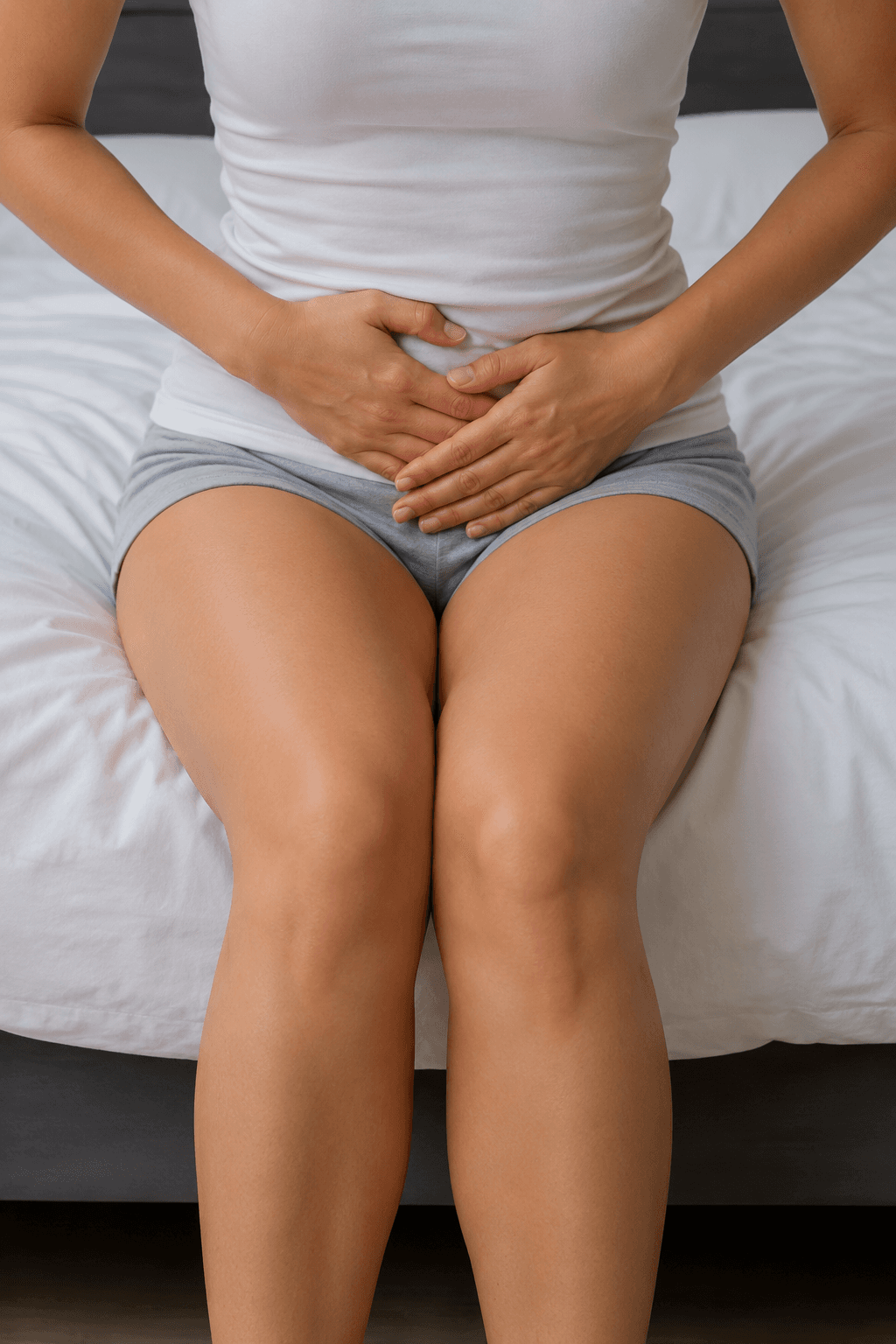
Women who live for months, sometimes for years, with chronic pelvic pain, a sensation of heaviness in the lower abdomen, discomfort during sexual intercourse, or with vulvar or leg varices that keep recurring despite apparently well-performed procedures.
The diagnostic pathway is often a long one. Gynaecologists, urologists, gastroenterologists, orthopaedic surgeons and physiatrists are consulted without a precise cause being identified. Yet in many cases the problem may have a well-defined origin: the venous system of the pelvis.
When the problem lies in the veins
Scientific research has profoundly changed the way these conditions are interpreted. We now know that pelvic venous disorders (PeVD) represent a group of conditions in which blood struggles to return from the pelvis towards the heart. The causes may vary:
- ovarian vein insufficiency;
- internal pelvic vein insufficiency;
- venous compressions, such as May-Thurner syndrome or Nutcracker syndrome;
- anatomical alterations of venous drainage.
The result is always the same: increased venous pressure, dilated veins and the appearance of symptoms that are often attributed to other diseases.
Why phlebologist and gynaecologist need to work together
For many years these patients were left "halfway" between two specialties. The gynaecologist ruled out gynaecological disease. The vascular specialist dealt with the leg veins. The pelvis remained a sort of no man's land.
This consideration gave rise to the PHLEBObgyn project, developed through the collaboration between Prof. Sergio Gianesini, president of the World Union of Phlebology and Lymphology, and Prof. Luca Gianaroli, a gynaecologist among the world's leading experts in reproductive medicine, with the aim of creating a genuinely multidisciplinary pathway for the diagnosis and treatment of pelvic venous disorders.
The idea is a simple one: bringing different areas of expertise together to understand a complex problem. Because a patient is not "phlebological" or "gynaecological": she is a person who deserves a complete assessment.
Symptoms that should not be underestimated
- pelvic pain persisting for months;
- a sense of heaviness in the pelvis that increases through the day;
- worsening in the standing position;
- pain during or after sexual intercourse;
- pain that increases in the days before menstruation;
- varices of the vulva or perineum;
- recurrent varicose veins of the lower limbs, particularly on the back of the thigh or in unusual locations.
These symptoms do not automatically mean that a pelvic venous disorder is present, but they do warrant specialist investigation.
Diagnosis today is far more precise
The modern approach is not based on a single examination. It starts with listening to the patient and integrating different clinical competences. The following may then be used:
- dedicated venous duplex ultrasound;
- transvaginal ultrasound with assessment of the venous circulation;
- CT or MR angiography in selected cases;
- venography where an endovascular treatment needs to be planned.
The aim is not simply to find a dilated vein, but to understand the entire haemodynamics of the pelvic circulation. More than that: collaboration between phlebology and gynaecology makes it possible not to overlook a possible vascular diagnosis while at the same time avoiding the treatment of simple venous dilations that are not in themselves an immediate sign of disease. An accurate differential diagnosis ruling out all other causes of gynaecological pelvic pain is indeed an ethical duty, and it is stated in the institutional recommendation document dedicated to this setting.
Increasingly less invasive treatments
Once the cause has been identified, treatment is tailored to the individual. Depending on the situation, the following may be indicated:
- lifestyle changes;
- gynaecological therapies;
- pharmacological therapy;
- elastic compression;
- embolisation of the diseased veins by minimally invasive procedures;
- treatment of any venous compressions.
In most cases conventional surgery is not required: modern endovascular techniques allow many patients to be treated through small venous accesses with very rapid recovery.
Looking beyond the symptom
Chronic pelvic pain should not be considered "normal", nor dismissed as a complaint without a cause. Modern medicine teaches us that many conditions require a multidisciplinary approach, and pelvic venous disorders are one of the most significant examples.
With this vision Prof. Gianesini and Prof. Gianaroli have also created a world congress format, the Le.G.athering World Congress — "gathering around the leg" specialists from the various fields, for a holistic and appropriate approach to the health of the person. Because sometimes the answer is not to look for one more specialist, but to get the specialists working together.