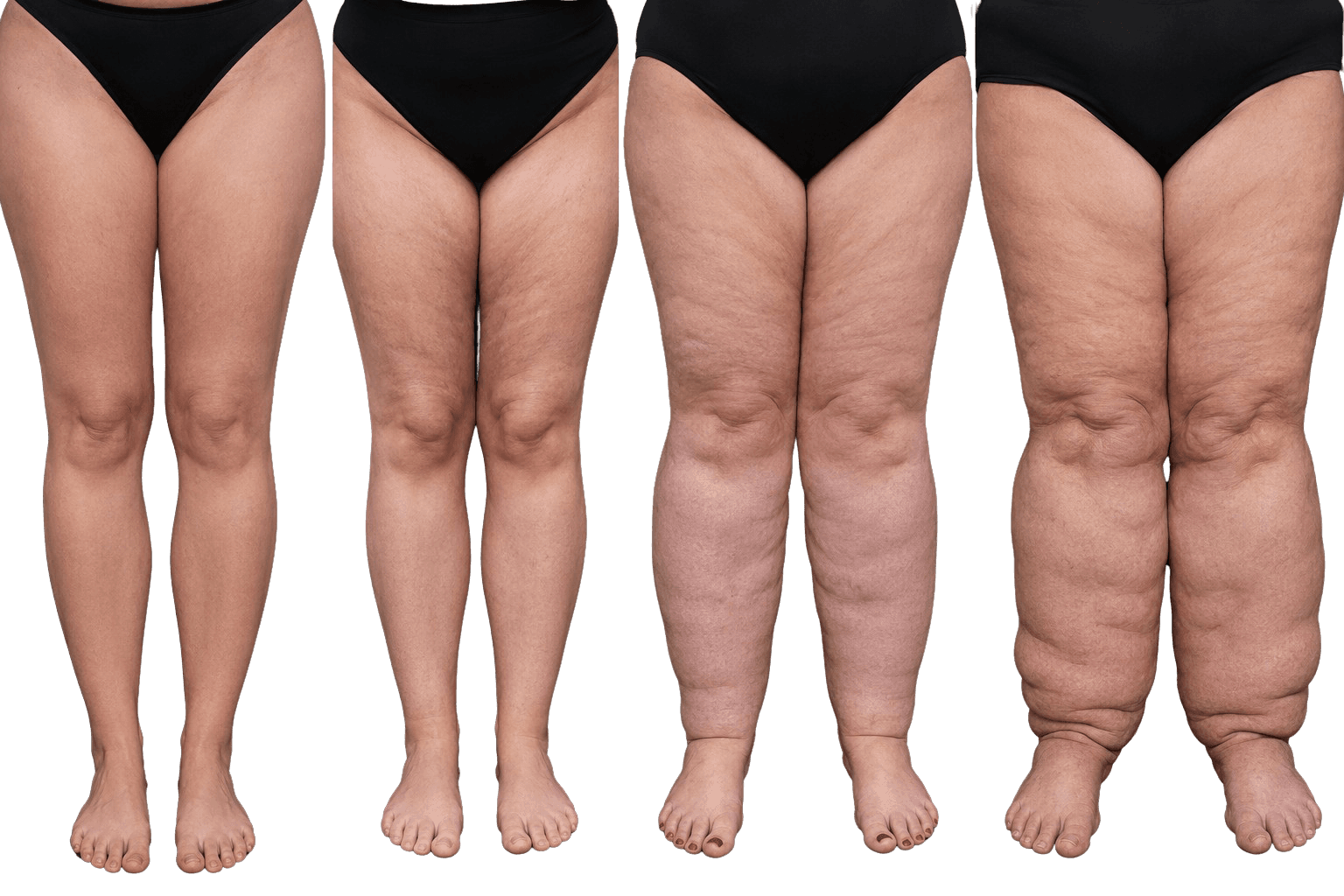
For many years lipedema was confused with obesity, lymphedema or simple water retention. We now know that it is a chronic disease of adipose tissue, affecting almost exclusively women, that requires a management approach very different from the one traditionally offered.
Pain on palpation, easy bruising, disproportion between trunk and limbs, heaviness, difficulty in movement and a progressive limitation of quality of life are only some of the manifestations that may accompany this disease. The good news is that we now have increasingly accurate diagnostic tools and integrated therapeutic pathways capable of addressing the problem in all its complexity.
This philosophy gave rise to the LIPOkinetik — Science Per Aquam protocol, developed in collaboration with the Idrokinetik Centres: a multidisciplinary pathway that places the person, and not just the individual symptom, at the centre.
Lipedema is not just a problem of fat
Lipedema involves adipose tissue, but also the microcirculation, the venous and lymphatic system, the musculoskeletal apparatus and often the patient's psychological wellbeing. Addressing it exclusively with a diet, or with a single programme of exercise, lymphatic drainage or compression, therefore means in most cases obtaining only partial results. Every patient has different characteristics and needs a pathway built around her own requirements, with the corresponding therapeutic technology.
The first step: a complete diagnosis
The protocol involves a multidisciplinary clinical assessment, aimed at distinguishing lipedema from other conditions that may present with similar symptoms: obesity, chronic venous disease, lymphedema or phlebo-lymphedema.
Particular attention is devoted to the study of the circulation through a specialist vascular assessment combined with venous and tissue duplex ultrasound, essential in order to identify any concomitant venous disease that might contribute to pain, oedema or the sensation of heavy limbs, as well as to characterise the subcutaneous tissue and the skin. Only in this way is it possible to personalise the rehabilitation programme and identify any specific treatments.
Movement in water: when physics becomes therapy
One of the distinctive elements of the protocol is the "Science Per Aquam" component: the use of aquatic therapy adapted according to the scientific studies published by Prof. Gianesini and his team.
- hydrostatic pressure promotes venous and lymphatic return;
- buoyancy reduces the load on the joints;
- the uniform resistance of water allows effective exercise even in patients who, because of pain, would find it difficult to train on land.
The aim is not to "do gymnastics in the water", but to use the aquatic environment as a genuine rehabilitation tool, in line with the scientific evidence previously collected.
Technology dedicated to lipedema
The pathway incorporates the use of hi-tech devices developed and patented specifically for the treatment of lipedema, selected within a personalised therapeutic programme. They do not replace therapeutic exercise or multidisciplinary management: they represent a support that can improve the patient's comfort and optimise the rehabilitation pathway when used according to precise clinical indications.
The musculoskeletal assessment
Pain and functional limitation can, over time, alter posture and the way a person walks. The protocol therefore includes a specialist musculoskeletal assessment of joint mobility, strength, balance, stability and movement patterns, in order to identify any compensations and to build a genuinely personalised exercise programme.
Nutrition: beyond simple weight loss
Many patients report having followed numerous diets without achieving any reduction in limb disproportion. The nutritional management of lipedema does not have weight loss as its sole objective: it aims to promote a more favourable body composition, to control any associated metabolic factors and to support the rehabilitation programme through a balanced and personalised diet.
Lifestyle is part of the therapy
Daily physical activity, sleep quality, stress management, compression therapy when indicated and sound behavioural habits are fundamental elements of the pathway, progressively guiding the patient towards changes that are sustainable over time.
And what if the pool is unappealing or not an option?
This is the most frequent question. Many people associate aquatic therapy with swimming: in reality the two are completely different. In the Science Per Aquam protocol there is no need to know how to swim and, in most of the exercises, there is not even any need to immerse the body above the abdomen. The water generally reaches waist height or slightly above, making it possible to exploit the benefits of hydrostatic pressure and of reduced joint loading without requiring any confidence in the water.
If the aquatic environment is not feasible, the pathway is adapted by combining dedicated technologies and "land-based" exercise programmes, always personalised on the basis of the clinical assessment. The principle remains the same: to build the treatment around the patient rather than forcing the patient to adapt to the treatment.
A protocol the patient can take away
Many patients reach the Idrokinetik Centres from distant regions, sometimes from abroad. The aim is not to create dependence on the centre, but to teach a personalised protocol that can be reproduced over time, even in the pool closest to home: exercises, how to perform them, progression and adaptations. The idea is a simple one: to provide concrete tools so that therapy becomes part of everyday life.